

AI & Spatial Intelligence at GOTOVIAR
Smart technology as part of our technical foundation
At GOTOVIAR, AI is not a standalone product and not a standard solution. We see AI as a supporting technology layer within our own XR engine, XeeXR and custom-built solutions. The value is not found in one specific AI feature, but in the way AI is carefully integrated into software, data, real-time communication, interactive content and spatial technology.
Our knowledge of AI goes back much further than the current AI hype. GOTOVIAR has built years of experience with interactive systems, browser-based software, visual technology and technical integrations between different data sources and platforms. That background defines how we look at AI: not as a quick add-on, but as a technology that only becomes valuable when the technical foundation is right.
That is why we always start with the objective, the existing systems, the available data, the desired interaction and the security requirements. Only then do we define what role AI can play within the overall solution. This may involve existing APIs, open-source technology, custom software development or integration with tools that are already used within an organization.
Every organization works differently. Data, processes, infrastructure and security requirements vary from company to company and from use case to use case. That is why GOTOVIAR always approaches AI as custom development. Not from a standard package, but from the question of how AI can be used safely, practically and technically responsibly within an organization’s existing environment.
Our engine is prepared for different forms of AI integration. Depending on the situation, AI can be applied in the cloud, within a hybrid architecture or locally within an organization’s own infrastructure. In specific scenarios, local applications on standalone headsets are also possible, supported by the increasing storage capacity and processing power of modern devices.
With AI & Spatial Intelligence, GOTOVIAR strengthens its technical modules where it makes sense. Not as hype and not as an end in itself, but as part of a broader technological foundation that enables visual, interactive and spatial solutions to become smarter, more useful and better aligned with real-world business processes.
Applications of AI & Spatial Intelligence
The AI capabilities below can be applied, depending on the client’s needs, within XeeXR Spatial Support, XeeXR Remote Guidance, custom VR and AR solutions, multi-user environments or integrations with existing business systems.
For each project, we determine which application adds value in a way that is technically feasible, practical and secure.
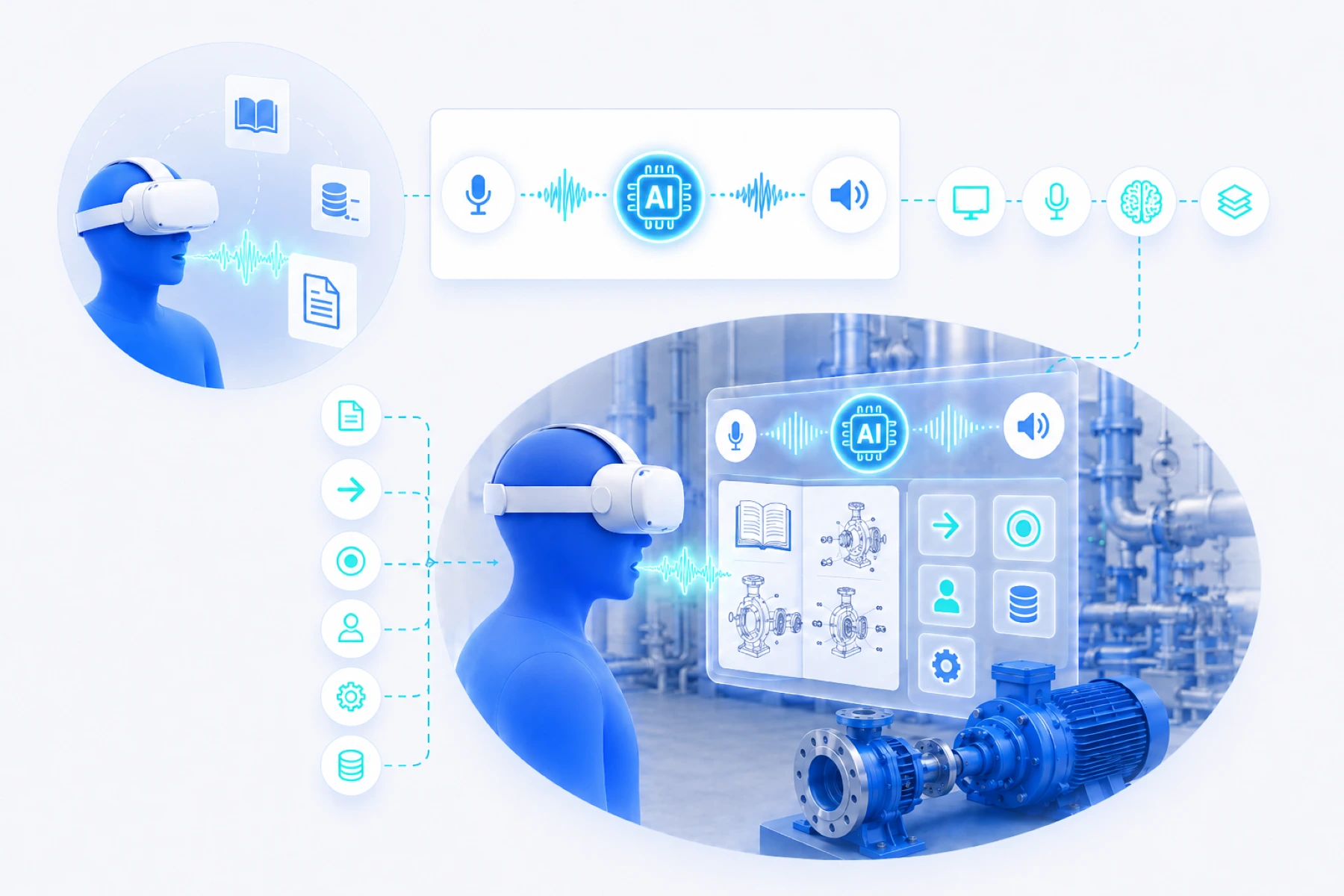
Voice-controlled interaction
With voice-controlled interaction, users can request information, give functional commands or start actions without menus, controllers or additional steps. This is especially valuable when someone needs to keep their hands free or requires support quickly.
Examples include opening a manual, showing the next step, starting a recording, calling an expert, activating a function or retrieving relevant information from connected documentation and systems.
This makes interaction within visual and spatial applications faster, more natural and more practical to use.
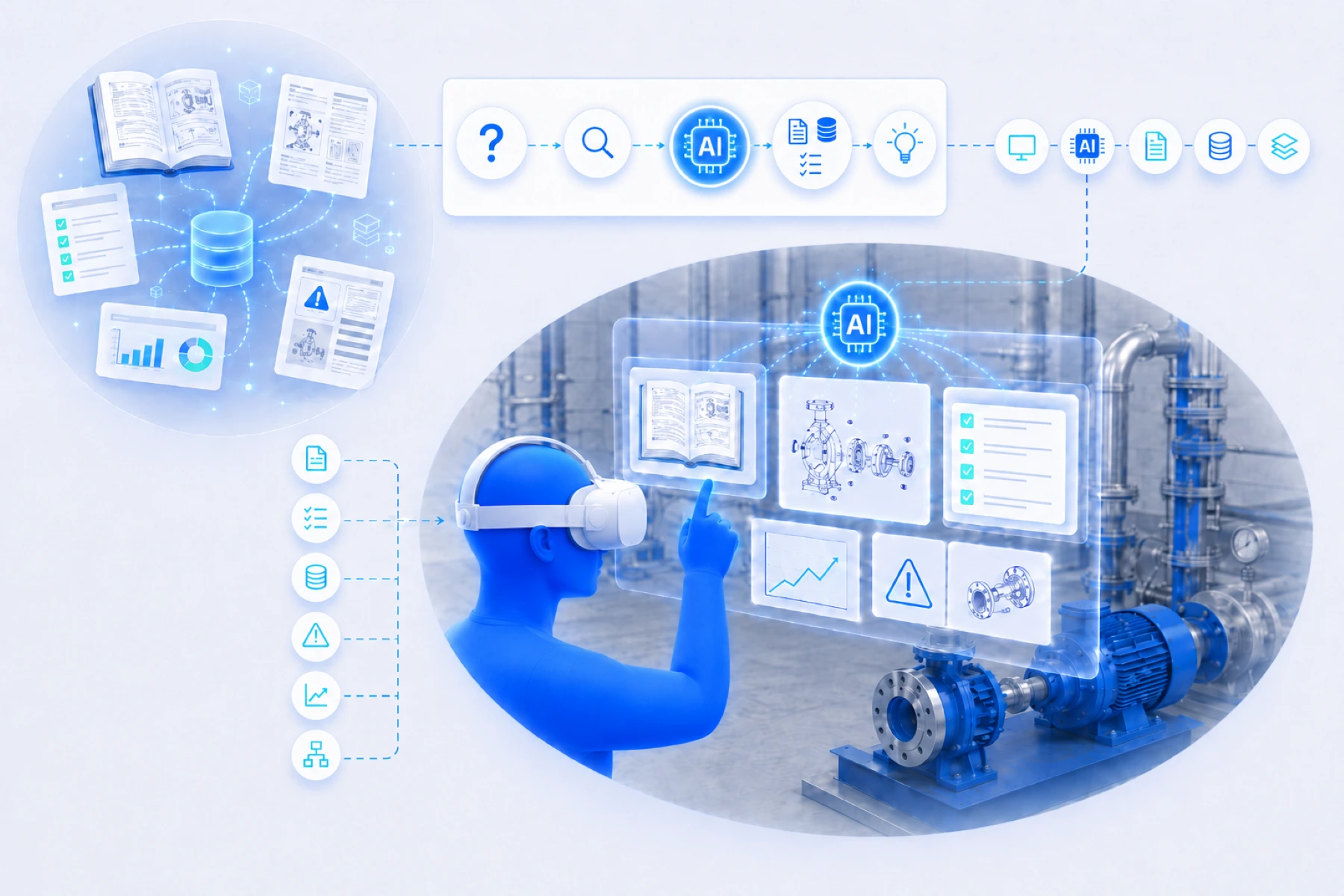
Retrieving information from manuals and business data
With AI, relevant information can be retrieved more quickly from manuals, technical documentation, procedures, checklists or existing business data. Users do not have to search through long documents or systems themselves, but can request specific information directly within the application.
This may include questions about a component, malfunction, workflow, safety instruction, maintenance step or product specification. The information comes from connected sources made available by the organization.
This makes existing knowledge more accessible at the exact moment someone needs it.
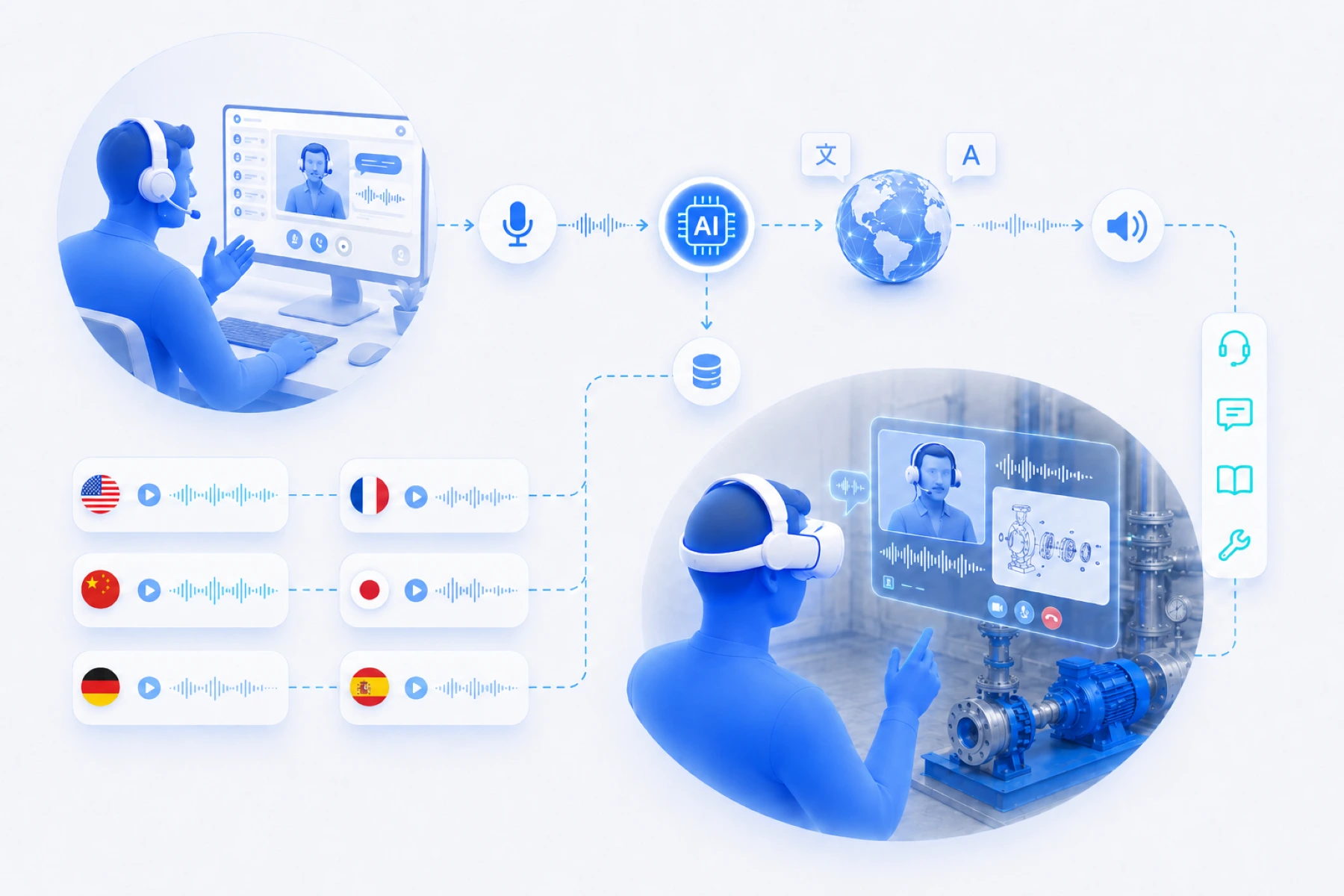
Live translation between users and experts
With live translation, users, experts and international teams can communicate more effectively when they do not speak the same language. Spoken information can be translated, making explanations, collaboration and support clearer and more accessible.
This can be used in situations where people with different languages work together, technical information needs to be explained or users can be better supported in their own language within a visual or spatial application.
This makes communication within international and technical processes easier to understand, faster and less dependent on language barriers.
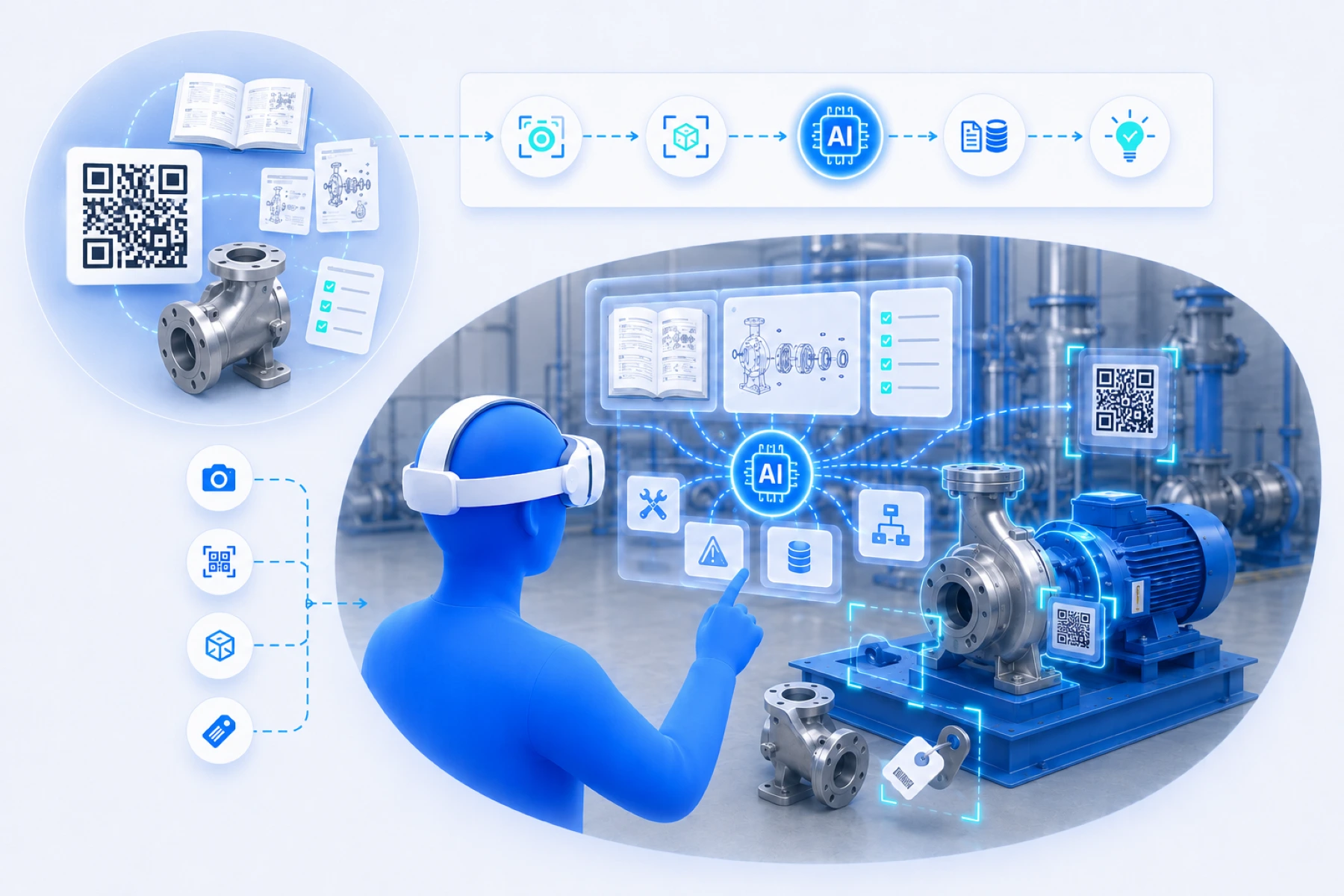
Recognizing objects, QR codes and components
With camera-based recognition, objects, QR codes, labels or components can be recognized and linked to the right context, documentation or action. This means users do not have to search manually, but can access information faster based on what they are seeing at that moment.
Data plays an important role here. The better the available information about objects, components, assets or systems is structured, the more accurately recognition can be linked to relevant documentation, instructions, workflows or existing business data.
After recognition, the user can receive an explanation through voice, request additional information or start a connected action. In this way, camera-based recognition becomes a practical way to directly connect visual information with technical knowledge, business data and spatial support.
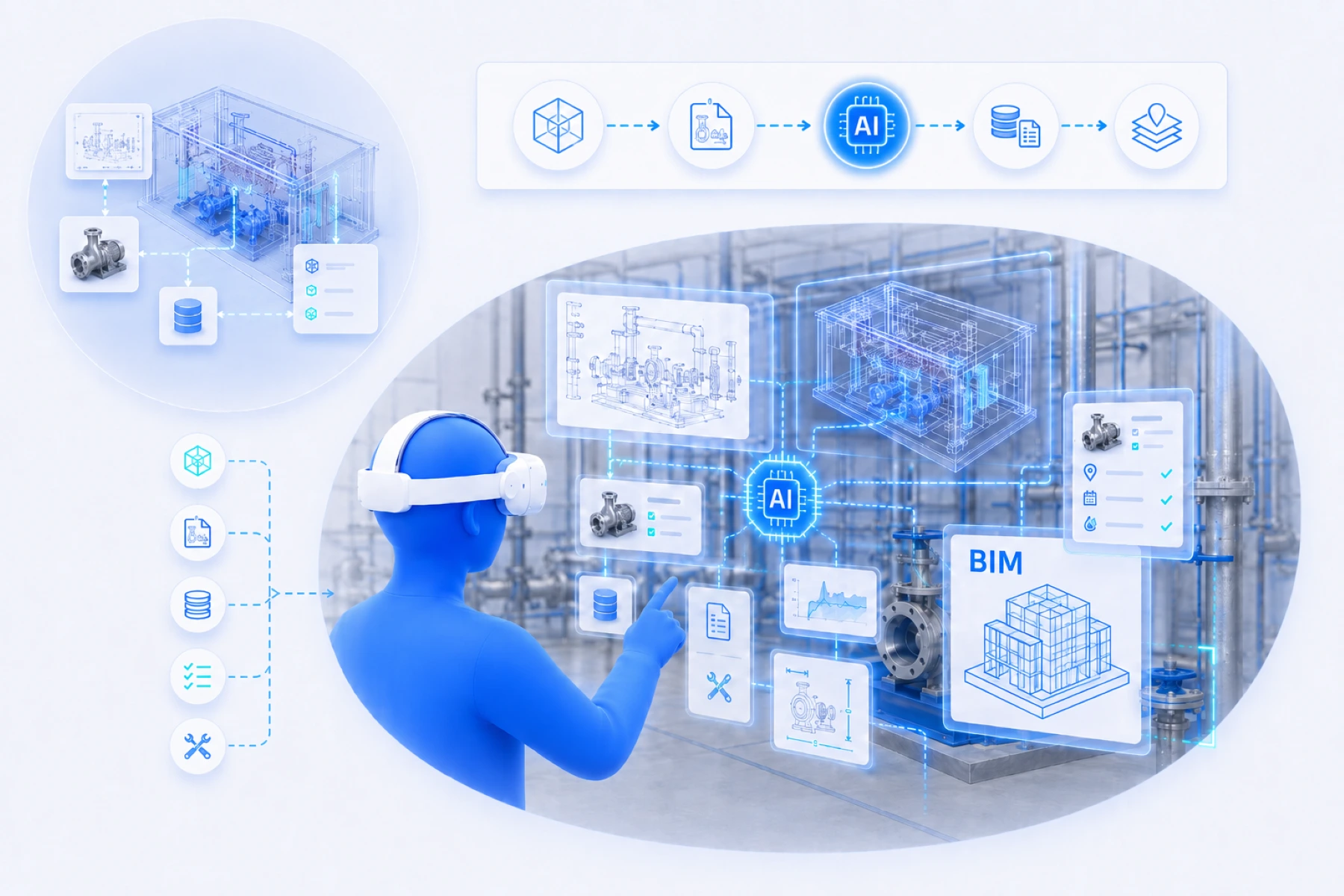
BIM and CAD data in the real working environment
BIM and CAD systems contain a large amount of technical information about buildings, installations, components, materials, dimensions and positions. With AI and XeeXR Spatial Support, we can explore how this data can be connected to the physical working environment.
This can include object information, technical specifications, documentation, maintenance data or model data that becomes available when someone is standing near an installation, space or component. The quality and structure of the available data determine what is technically possible.
This allows digital model information to be used more practically in the real working environment, without someone having to constantly search through separate drawings, screens or complex systems.
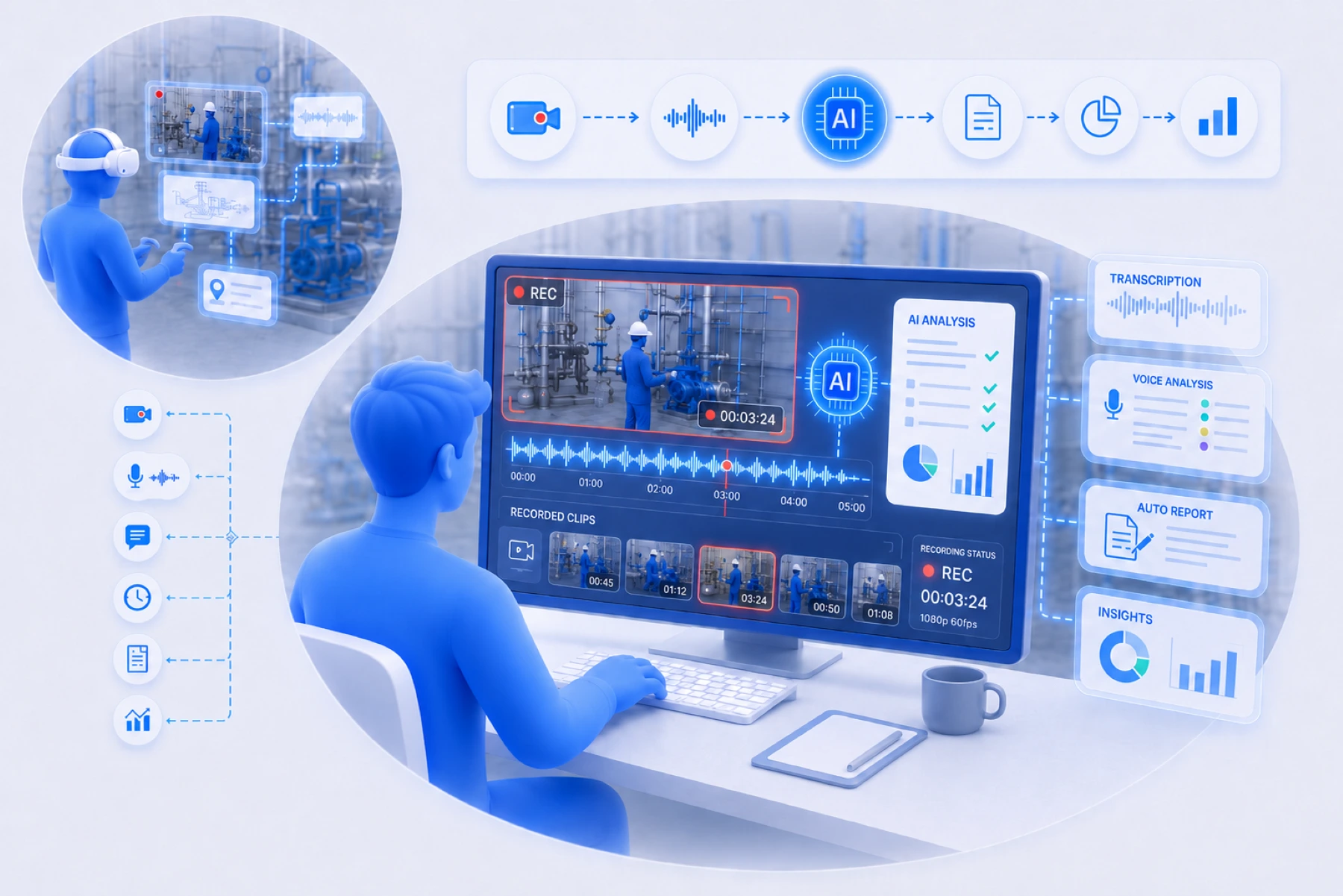
Session analysis and automated reporting
With AI, video recordings, conversations, annotations and key moments from a session can be converted into a usable report or summary. Where available, additional session data can also be included, such as interactions, timestamps, actions or sensor data.
This may include an overview of completed steps, comments made, issues discussed, annotations placed or moments that are relevant later for handover, invoicing, inspection, evidence or quality improvement.
This makes information from sessions better documented and easier to retrieve. This data can also become valuable later for analysis, process optimization, existing training programs or business intelligence.
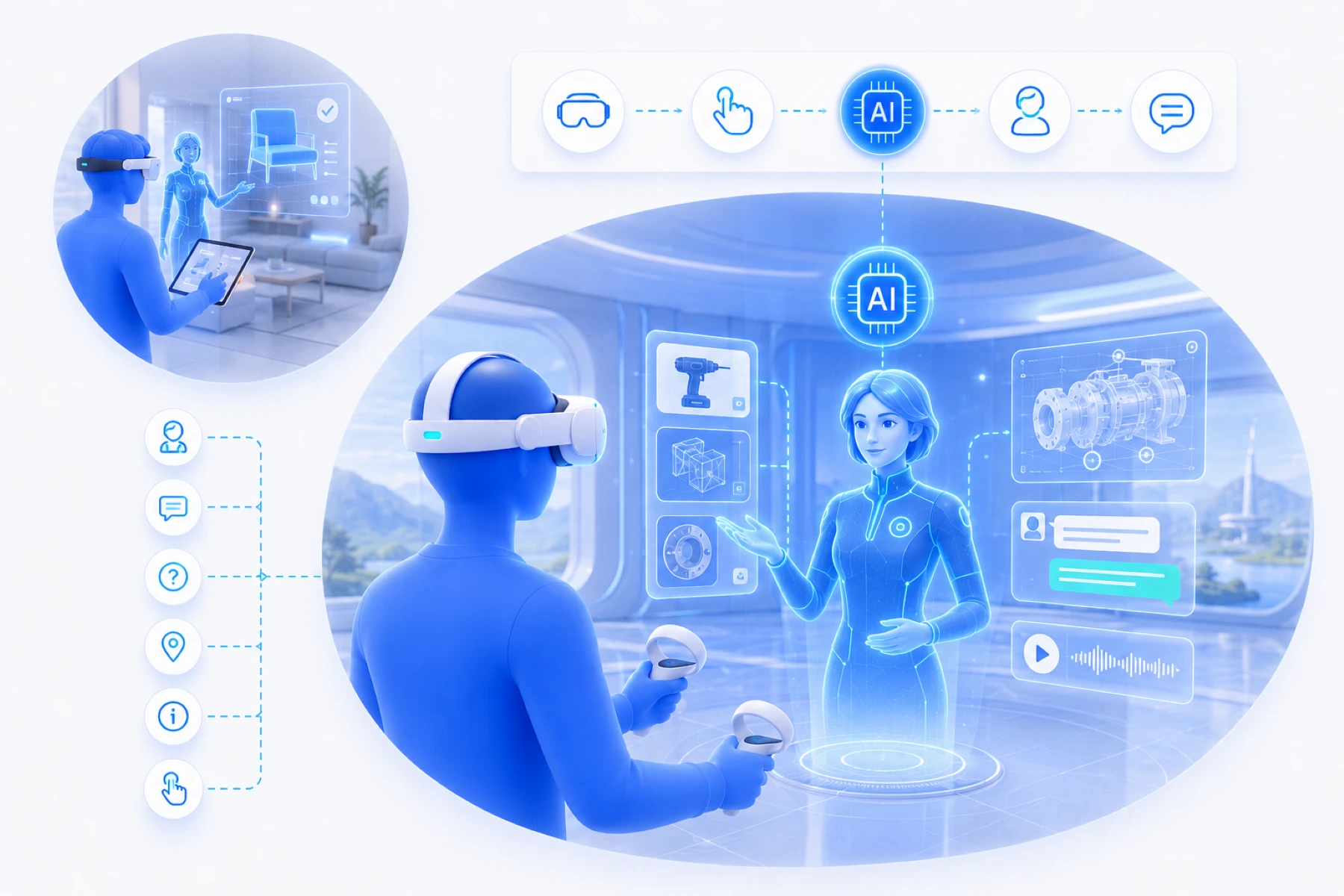
Intelligent avatars in interactive environments
With AI, avatars in interactive VR and AR environments can respond to questions, situations or predefined scenarios. This can be used as an additional layer within a custom experience, for example to provide explanations, interaction or support inside a virtual environment.
This may include a virtual host, product specialist, instructor or digital character that provides information, answers questions or guides users through an interactive environment. The content and behavior are tailored to the objective, the available knowledge sources and the desired user experience.
This allows interactive environments to become more natural, personal and informative, without taking over the main role of the application.
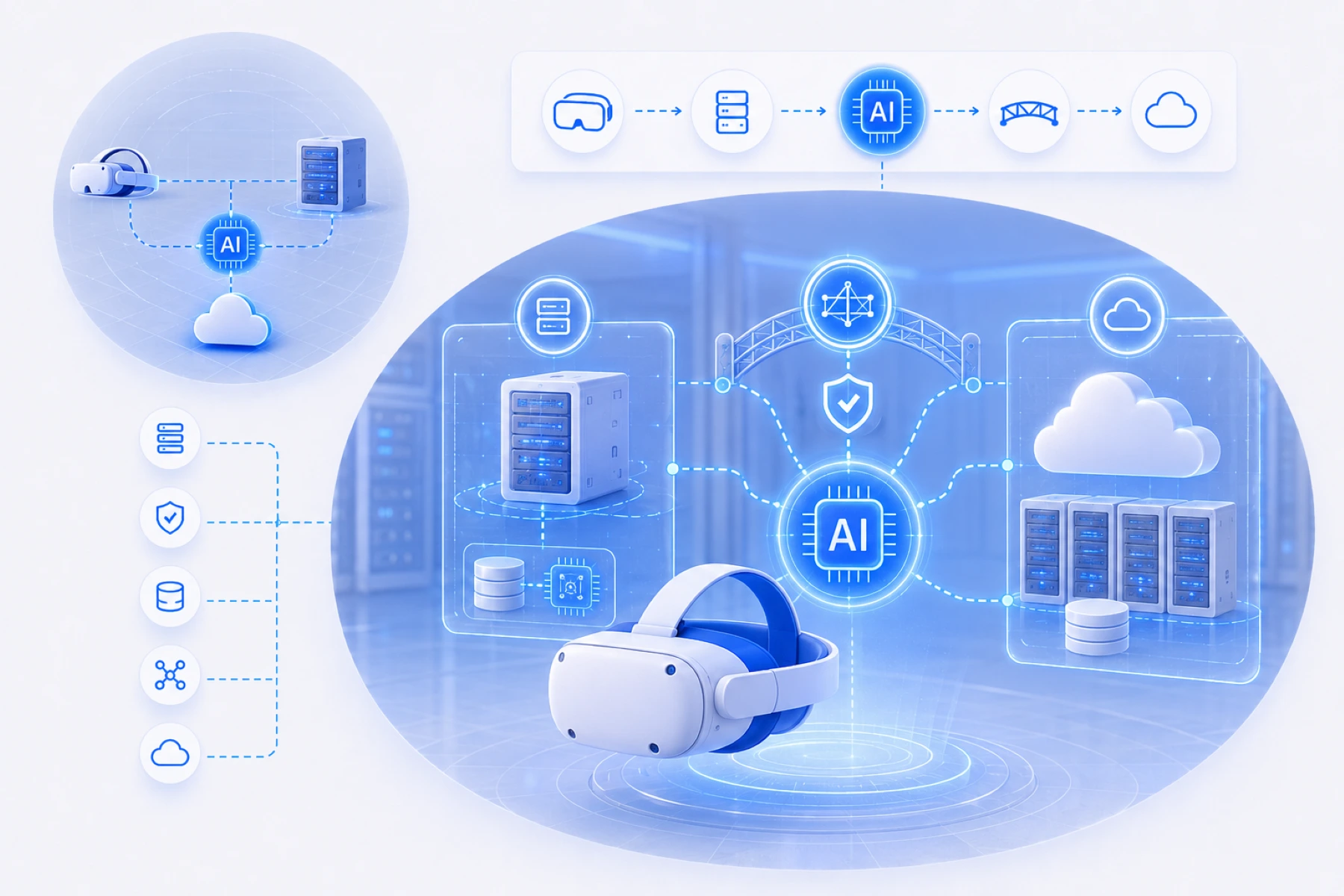
AI locally, hybrid or in the cloud
Not every AI application needs to be set up in the same way. Depending on the data, security, performance and technical requirements, AI can be applied locally, in a hybrid architecture or in the cloud.
This may include situations where sensitive information needs to remain within the organization’s own infrastructure, lightweight AI functionality can run locally on a device or heavier processing is handled through a secure cloud environment.
This allows each project to use a technical setup that fits the organization, the available systems and the requirements around data, security and scalability.
The Value of AI
The value of AI & Spatial Intelligence
AI & Spatial Intelligence helps organizations make information available faster, adapt support more effectively to the situation and make smarter use of existing knowledge. By connecting AI with XR, data, systems and spatial context, organizations gain more control over processes that normally require extensive explanation, manual searching or knowledge transfer.
Faster access to the right information
AI can make relevant information from documentation, systems and business data available at the moment someone needs it.
More context in spatial processes
By combining AI with XR, visual input, spatial context and interaction, support can be better aligned with what someone sees, does and needs.
Configured more securely around data
For each project, we determine how AI should be technically configured, with attention to data, infrastructure, access control and existing business processes.
More value from existing knowledge
Manuals, sessions, model data, workflows and business information can be used more intelligently within XeeXR, custom XR solutions and connected systems.
Get in Touch
Discuss the possibilities for your organization
Would you like to explore how AI & Spatial Intelligence can add value to your processes, data or XR solutions? GOTOVIAR is happy to help you think through a technical setup that fits your organization, systems and security requirements.
Contact us. Together, we will explore which AI application is practical, secure and feasible within your situation.