
Remote VR training guidance
How do you guide VR training remotely?
VR training is evolving rapidly. Organizations are increasingly investing in immersive training for onboarding, safety procedures, technical instruction, and simulations. The quality of VR applications continues to improve, headsets are becoming more powerful, and experiences are becoming more realistic. Yet one part of the process remains surprisingly traditional: guiding users during the training itself.
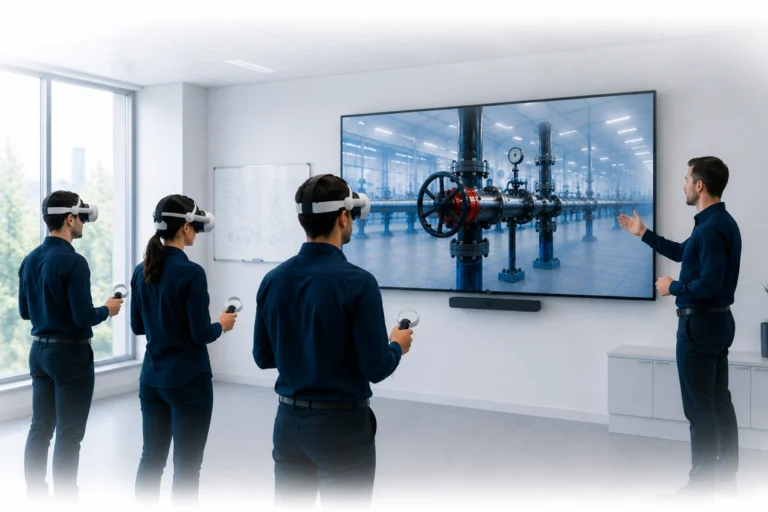
In many organizations, trainers still physically stand next to participants to follow what happens during a VR session. Sometimes this is done through a monitor in the same room, sometimes through a local casting solution on the same network. That works as long as VR training remains small-scale. But once organizations want to scale immersive training across multiple locations, teams, or international offices, a fundamental limitation appears.
How do you guide VR training remotely without depending on physical presence?
For many organizations, that is where the real challenge begins.
Why remote VR training guidance remains difficult to scale
Many VR platforms are technically ready for large-scale deployment. Applications can run on multiple headsets and users can complete training sessions independently. But in practice, effective training is not only about the software itself.
A trainer needs to see what a user is doing. Understand where someone is struggling. Assess whether procedures are being followed correctly and provide immediate support when necessary. As soon as guidance becomes an essential part of training quality, dependence on physical presence automatically appears.
That is where scalability breaks down.
More VR training sessions often mean more trainers, more travel, more scheduling, and more operational pressure. Not because the technology falls short, but because the guidance surrounding VR training is still largely based on a local model.
This is becoming increasingly visible as organizations no longer see VR as an experiment, but as a serious part of their operational processes.
Why VR casting eventually becomes limiting
To follow what users see inside VR headsets, many organizations still rely on casting solutions today. The image from the headset is mirrored to a monitor, television, or computer so others can watch the session.
Although this seems practical, casting was originally designed for local use. Trainers and users are usually in the same room or connected to the same network. As soon as training takes place remotely or users are spread across multiple locations, limitations in flexibility and scalability quickly become visible.
In addition, casting remains largely passive. A trainer can watch the session, but the technology was not designed around active remote VR training guidance. That difference may seem small, but it becomes operationally more important as immersive training is adopted more professionally within organizations.
Many companies are heavily investing in VR content today, while the guidance surrounding it still depends on physical presence. That is exactly where the next phase of immersive training begins.
Learn the difference between local VR casting and internet-based VR streaming.
What Remote Guidance fundamentally changes
Remote Guidance introduces a different model for guidance.
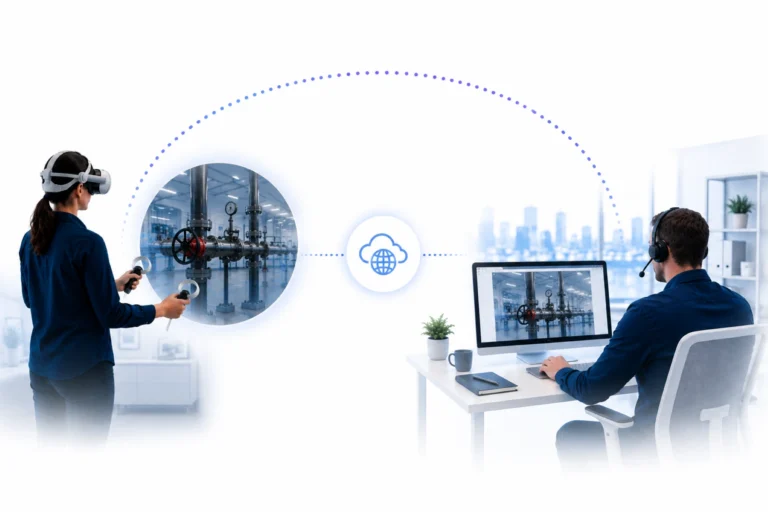
Instead of mirroring a screen locally, the live VR experience is streamed over the internet to a browser-based environment where a trainer can follow in real time what the user sees and experiences inside the headset.
This completely changes the role of guidance.
A trainer no longer just watches from a distance, but gains direct insight into the user’s behavior, progress, and interactions during the training itself. Problems become visible the moment they occur. Support can be provided immediately without the trainer and user needing to be in the same location.
VR training therefore changes from an isolated experience into a connected and actively guided process.
That does not only affect training quality, but also scalability, knowledge transfer, and operational efficiency.
How organizations guide VR training remotely
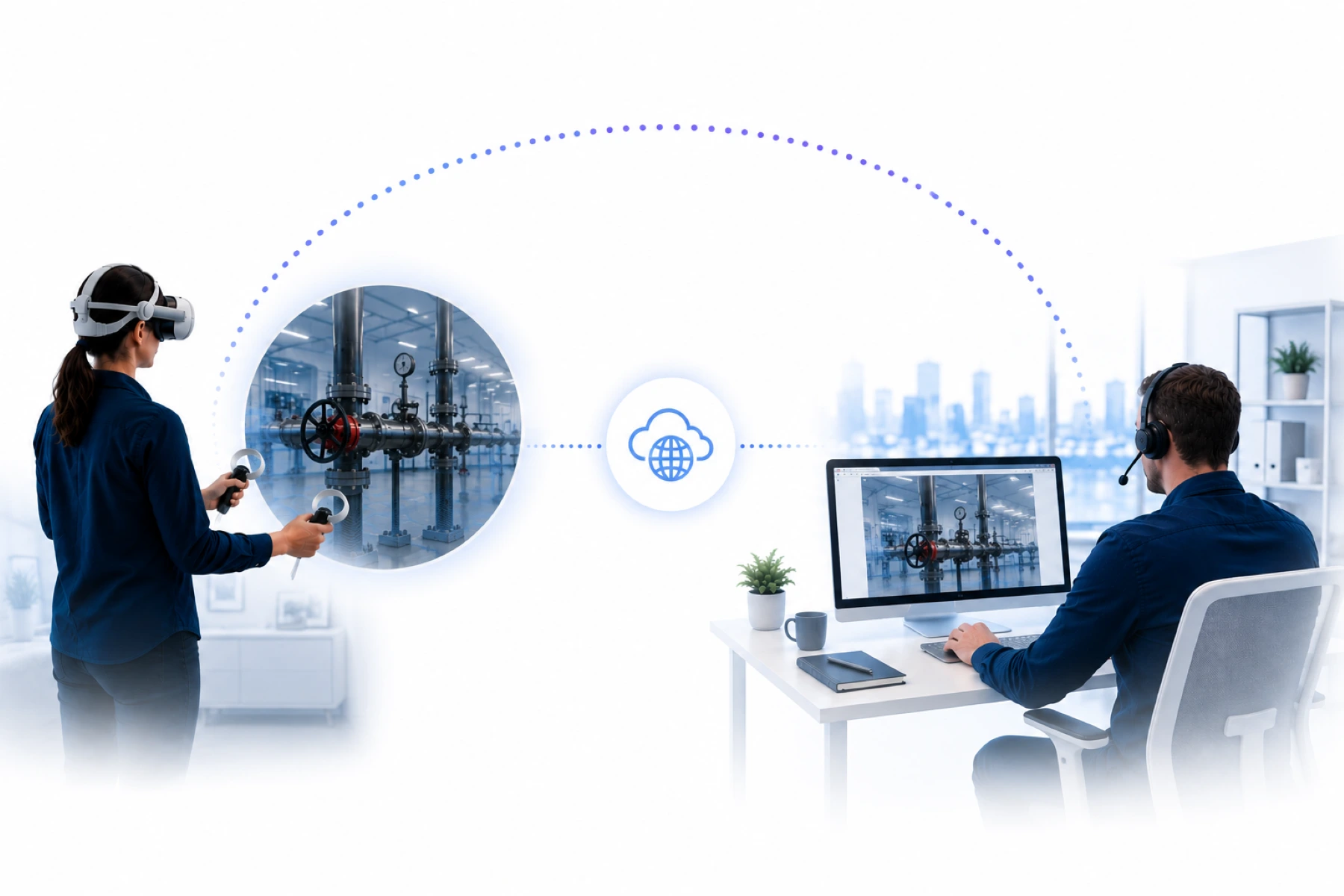
The user starts a training session from a standalone VR headset. What the user sees is streamed live over the internet to a browser dashboard where a trainer or supervisor can follow the session in real time.
As a result, the trainer and user no longer need to be in the same room or on the same network. A trainer can follow a user from the office while that user is in another location or even another country. Experts can provide centralized support without traveling or being physically present on-site.
For organizations with multiple branches, international teams, or scalable training programs, this changes how immersive learning is deployed. The limitation is no longer the physical presence of trainers, but how effectively guidance is organized.
And that is exactly where the real strategic value of Remote Guidance begins.
Discover more about Remote Guidance
Why live visibility inside VR is becoming increasingly important
As VR training is used more seriously within organizations, the need for control and insight continues to grow.
A training session is not only about the application itself, but especially about what happens during the session. How do users respond? Where do mistakes occur? When is additional support needed? How consistent are training sessions across teams or locations?
Without live visibility, VR training remains largely a black box for organizations.
With Remote Guidance, real-time insight into the learning process becomes possible. This allows guidance to become more consistent, expertise to be deployed more centrally, and support to be provided faster when needed. As a result, immersive training becomes not only more scalable, but also easier to manage within larger organizational structures.
That shift from “VR as an experience” to “VR as a controlled process” will become increasingly important in the coming years.
Discover how VR trainers can monitor users in realtime through a browser-based dashboard.
Browser-based VR streaming changes the workflow
An important difference compared to traditional solutions is that modern Remote Guidance platforms can work browser-based.
As a result, no complex local installation is required to follow sessions. Trainers can simply use a browser to watch live from a standalone VR headset over the internet, without depending on local casting setups or physical training rooms.
That may seem like a small technical detail, but operationally it fundamentally changes the workflow. Organizations become more flexible in how they organize immersive training, and experts can be deployed much more efficiently across multiple locations at the same time.
This is becoming especially relevant in enterprise environments, where immersive technology is shifting from innovation project to a structural part of training and support.
The role of XeeXR
GOTOVIAR developed XeeXR Remote Guidance specifically for live guidance of standalone VR headsets over the internet.
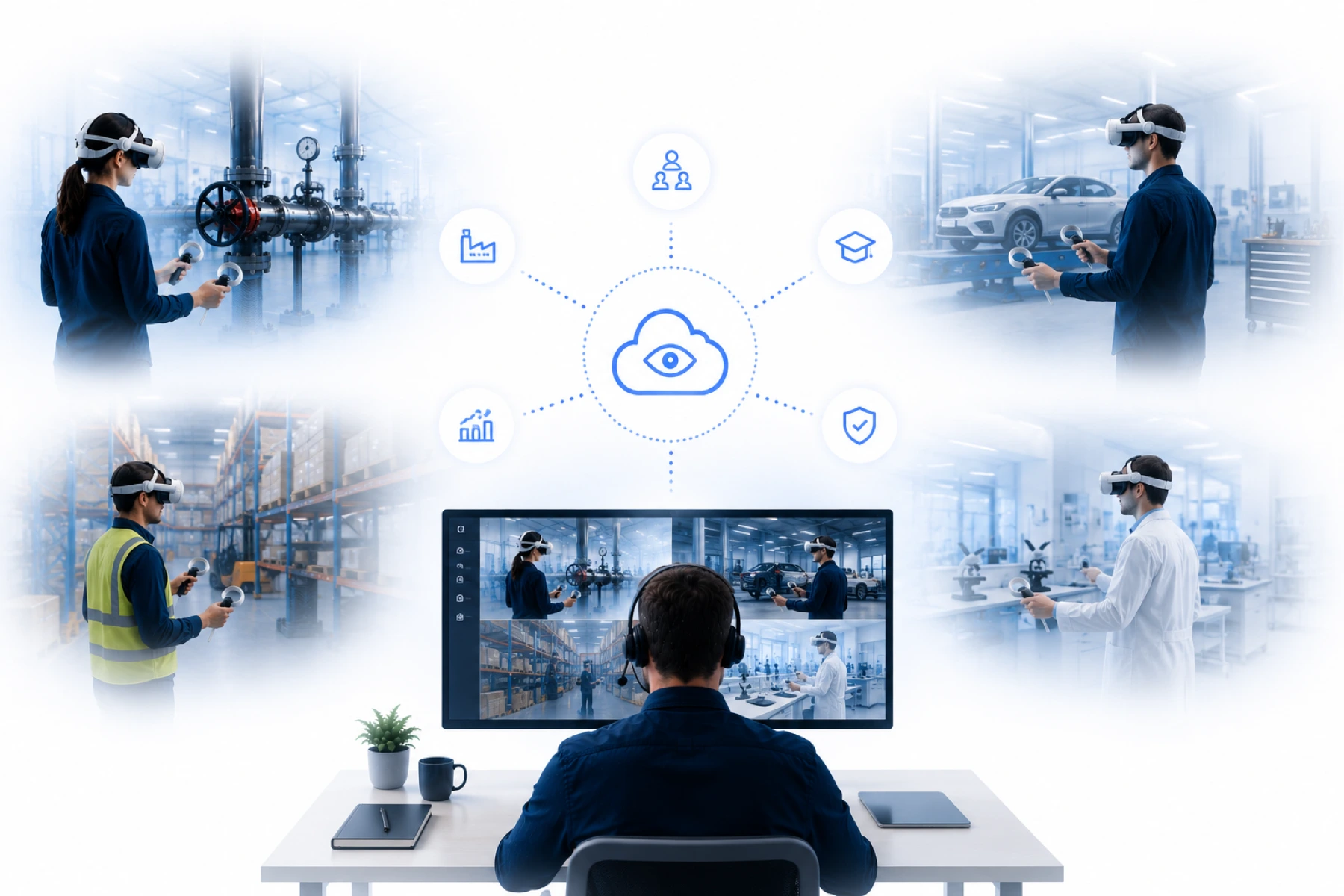
Instead of relying on traditional casting, XeeXR makes it possible to stream VR sessions live to a browser-based dashboard. This allows trainers, supervisors, and support teams to follow the VR experience itself in real time.
The solution is developed for organizations that want to scale immersive training without depending on local guidance or the physical presence of trainers. In this way, XeeXR aligns with a development that is becoming increasingly visible in the XR market: the shift from local VR training to centrally guided immersive workflows.
Conclusion
Remote VR training guidance will become increasingly important in the coming years as organizations deploy immersive technology more broadly across training, onboarding, and operational support.
The challenge is shifting from the VR content itself to the guidance surrounding the process. Local casting solutions often provide insufficient flexibility and scalability for this.
Remote Guidance makes it possible to follow VR training sessions live, guide users in real time, and make expertise centrally available without physical limitations.
As a result, VR training changes from a local experience into a scalable and connected system that better matches the way modern organizations work.
Frequently asked questions about remote VR training
How does remote VR training work?
With remote VR training, a trainer can follow live what a user sees in a standalone VR headset. Through a browser-based dashboard, the session can be viewed in real time and remote guidance can be provided without physical presence.
What is the difference between VR casting and Remote Guidance?
VR casting is mainly intended for local viewing within the same network or the same room. Remote Guidance makes it possible to follow VR training sessions live over the internet and actively guide users remotely.
Why is guidance becoming more important in VR training?
As organizations use VR training more professionally, the need for control, quality assurance, and real-time support increases. Live guidance helps organizations make training sessions more consistent, more scalable, and easier to manage.
Can remote VR training be used across multiple locations?
Yes. Remote Guidance makes it possible to guide users in different locations from one central environment. This allows trainers and experts to be deployed more efficiently without travel.
Which VR headsets are suitable for Remote Guidance?
Remote Guidance is mainly used with standalone VR headsets such as the PICO 4 Enterprise, Meta Quest 3, and Meta Quest 3S. These headsets have the processing power and streaming capabilities needed for live guidance over the internet.
Start a Free Trial
Curious how remote VR training works in practice?
GOTOVIAR offers an Early Access program for organizations that want to start early with XeeXR Remote Guidance for standalone VR headsets.
Discover how live VR streaming through a browser-based dashboard works, follow VR sessions in real time, and experience how remote guidance can make immersive training more scalable within your organization.
Start a free trial and discover how XeeXR Remote Guidance works in practice.